What are you looking for?
Search

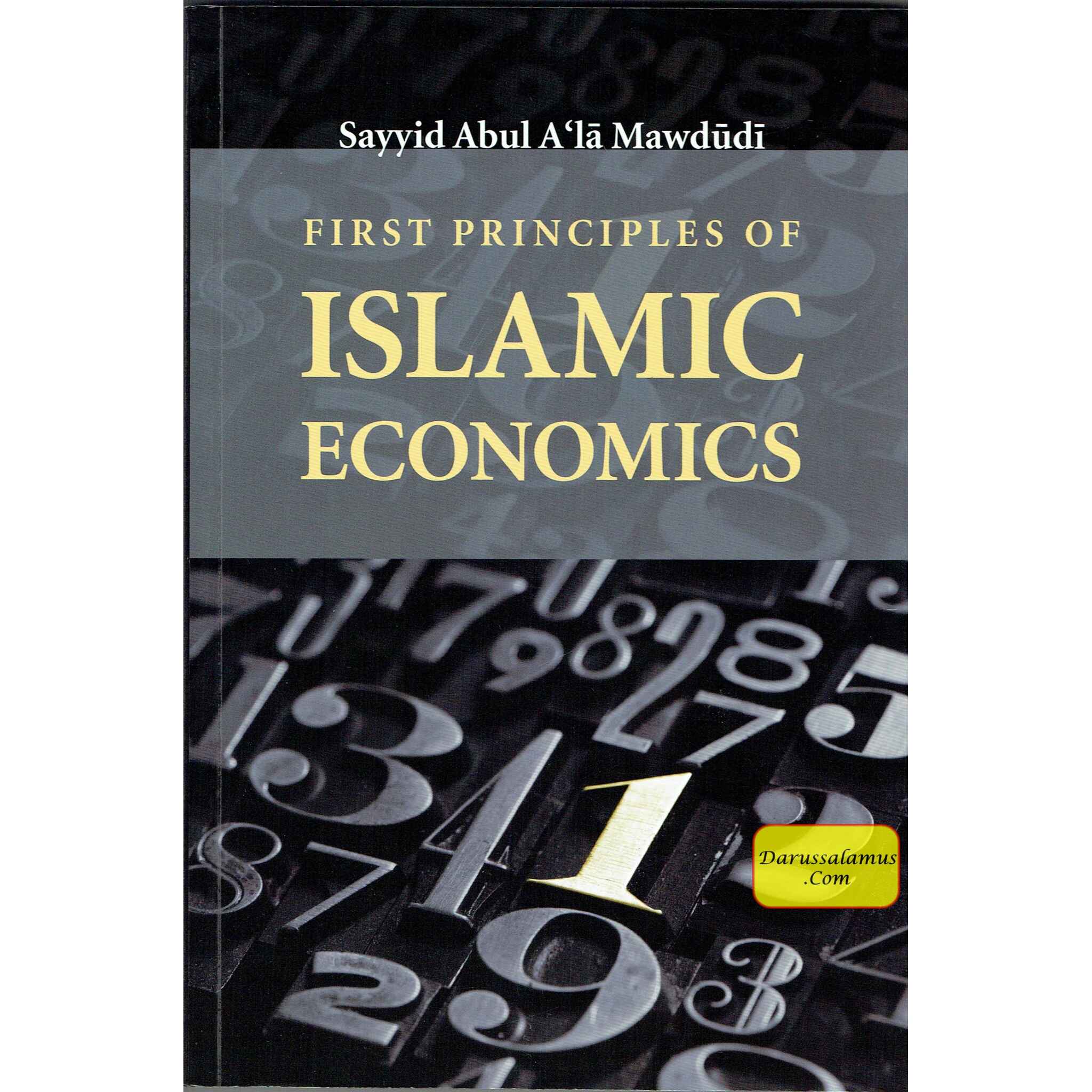
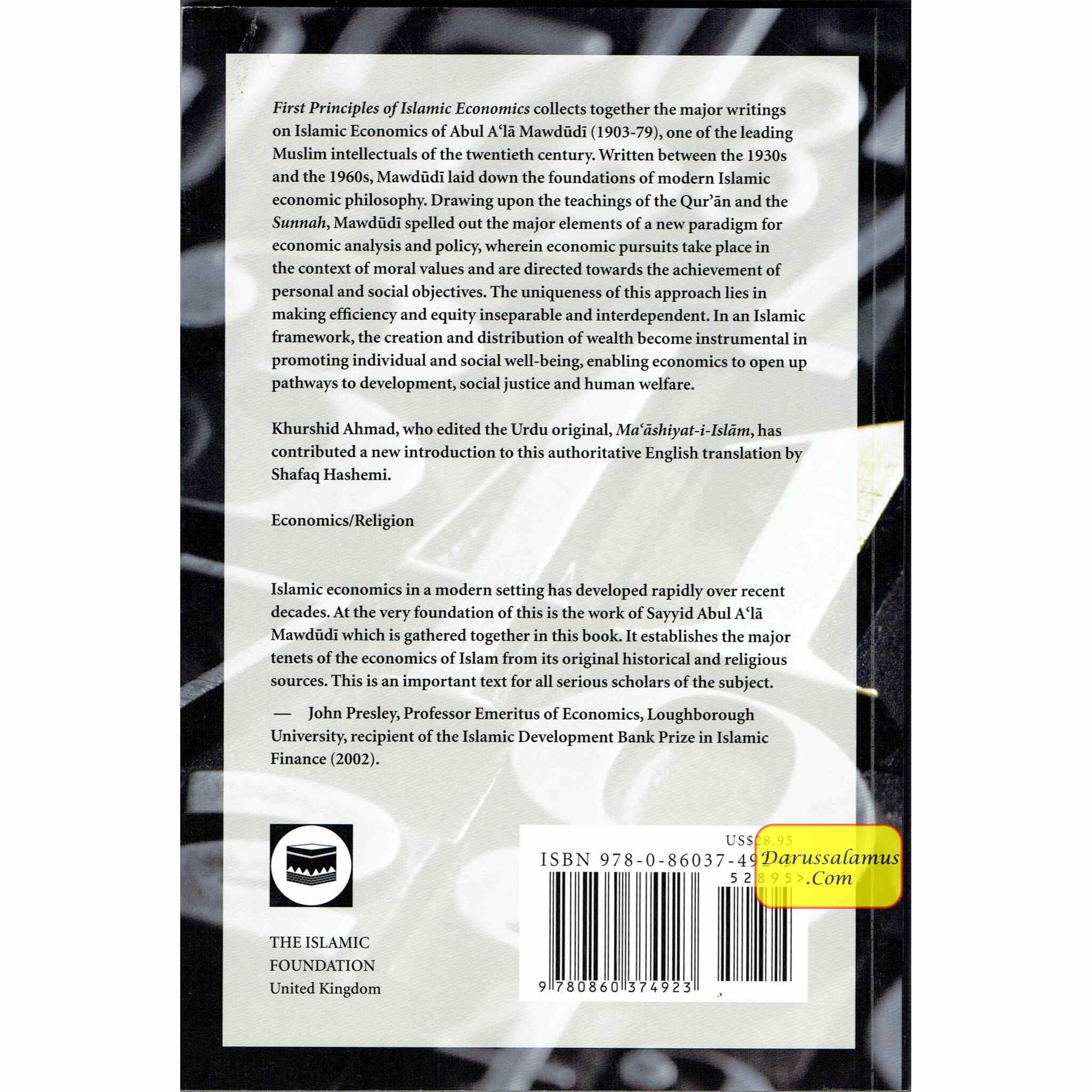
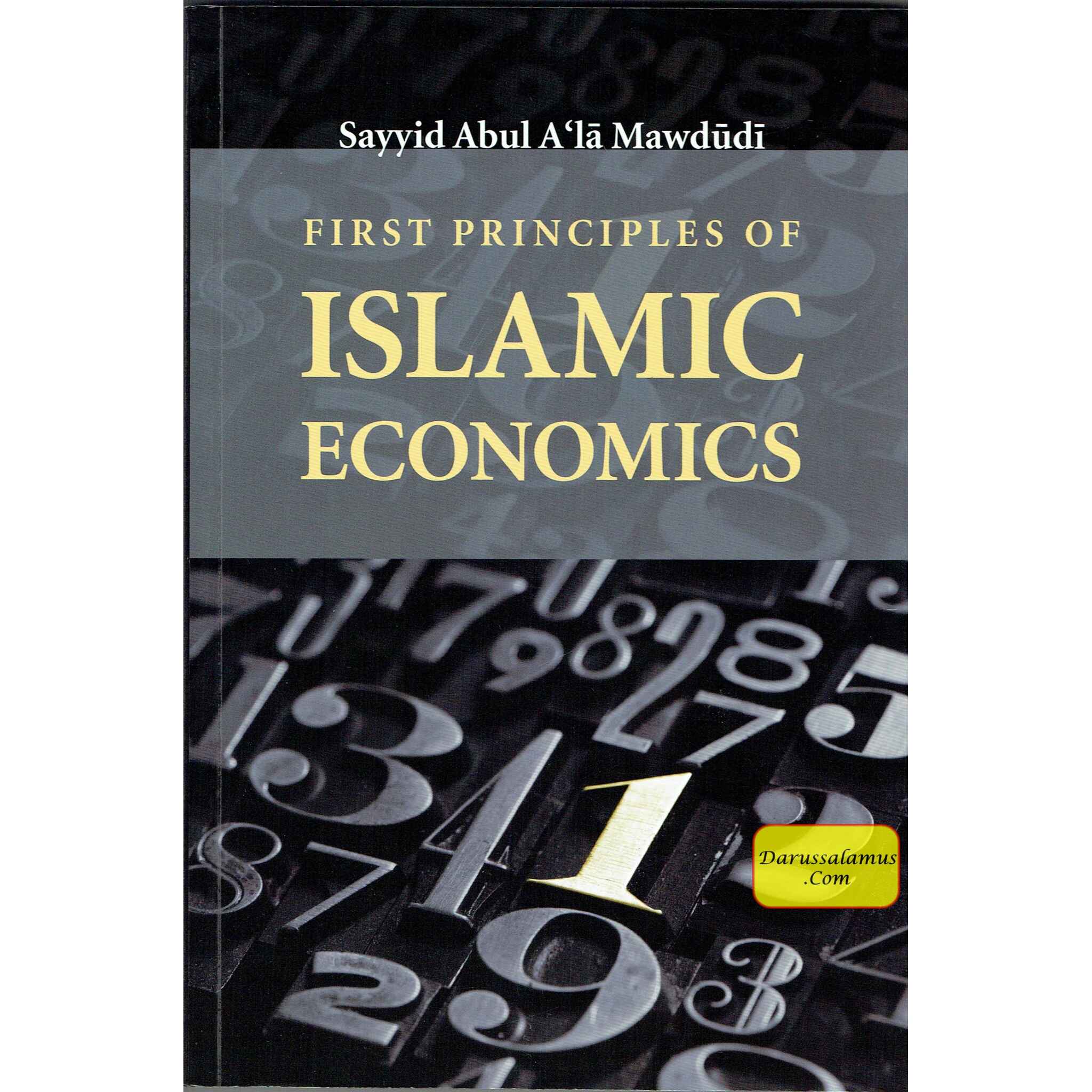
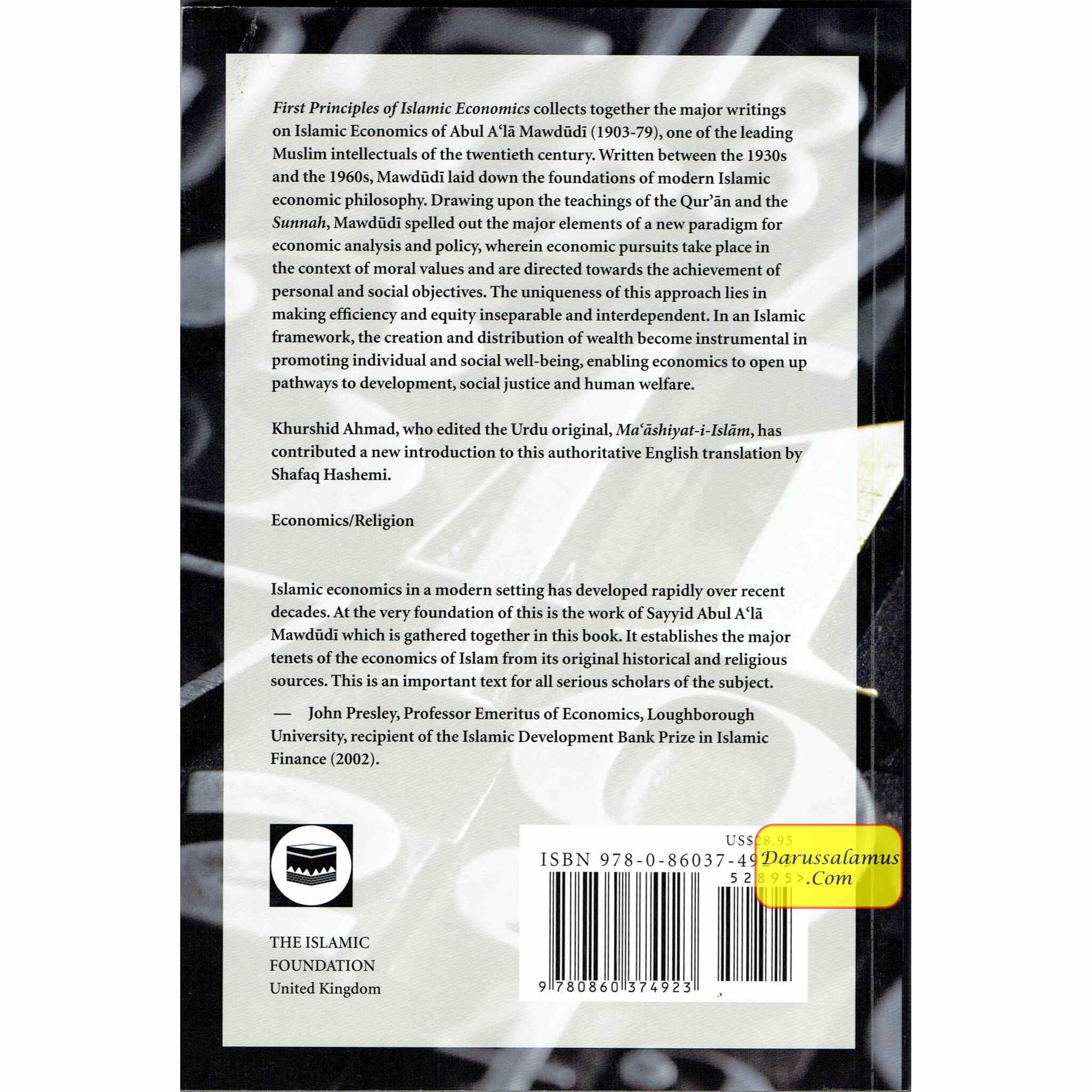

First Principles of Islamic Economics By Sayyid Abul A'la Mawdudi
ISBN: 9780860374923Author: Sayyid Abul A'la Mawdudi
Book Binding: Softcover
Pages: 290
Size: 6.2 X 9.3 X 0.7 Inches
Publication: 2013
Description
About This Book:
Sayyid Abul A'la Mawdudi's important work 'First Principles of Islamic Economics' goes into the foundational ideas and economic philosophy of Islam. This book, written by one of the twentieth century's most prominent Islamic philosophers, offers profound insights into how economic systems might align with Islamic ideals and principles to build a just and equitable society.
The following are key features of 'First Principles of Islamic Economics':
Islamic Economic Framework:
The book gives a thorough framework for studying economics from the perspective of Islamic principles. It investigates how Islamic moral and ethical precepts might be used to govern economic activity.
Justice and Equity:
Justice and equity are important in economic systems, according to Mawdudi, who highlights the Islamic emphasis on income distribution, fair trading practices, and social welfare.
Individual and Social Roles:
The book covers the roles and responsibilities of both individuals and society in developing an Islamic-based economic system. It advocates the notion that economic prosperity should be compatible with spiritual and ethical ideals.
Money and Poverty:
Mawdudi discusses money increase, poverty alleviation, and the Islamic notion of generosity (zakat). He presents a picture of an economic system that prioritizes the well-being of the poor.
Islamic Banking and Finance:
The book delves into the concepts of Islamic banking and finance, such as interest-free banking and the concept of profit-and-loss sharing (mudarabah). It lays the groundwork for understanding the ideas underlying Islamic banking.
Contemporary Relevance:
Despite being written some decades ago, Mawdudi's work is still highly relevant in today's global economic context. It provides advice on how to manage contemporary economic difficulties while sticking to Islamic teachings.

You have successfully commented, please wait for review
Copied Successfully
You can enjoy up to 1 free gift!