What are you looking for?
Search

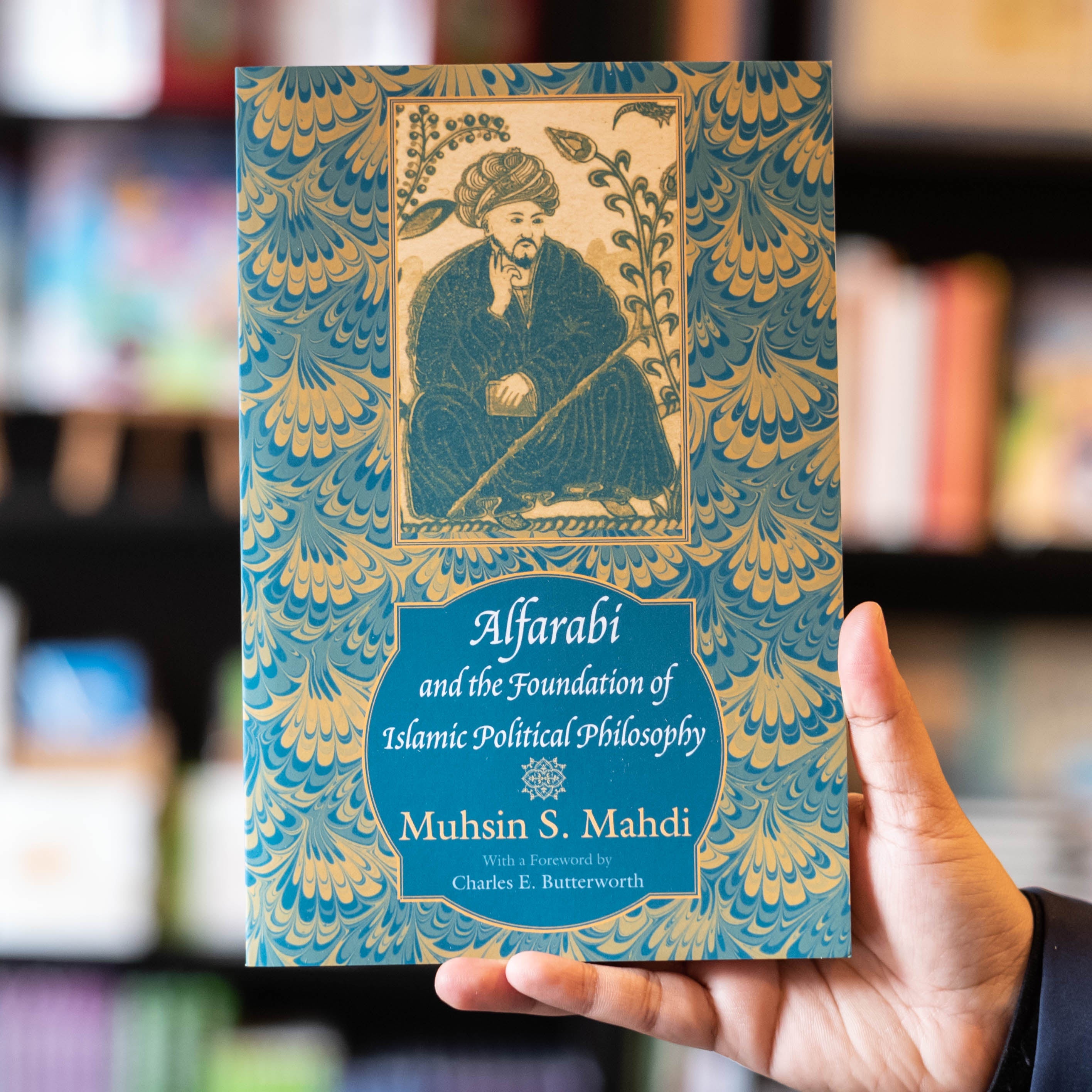

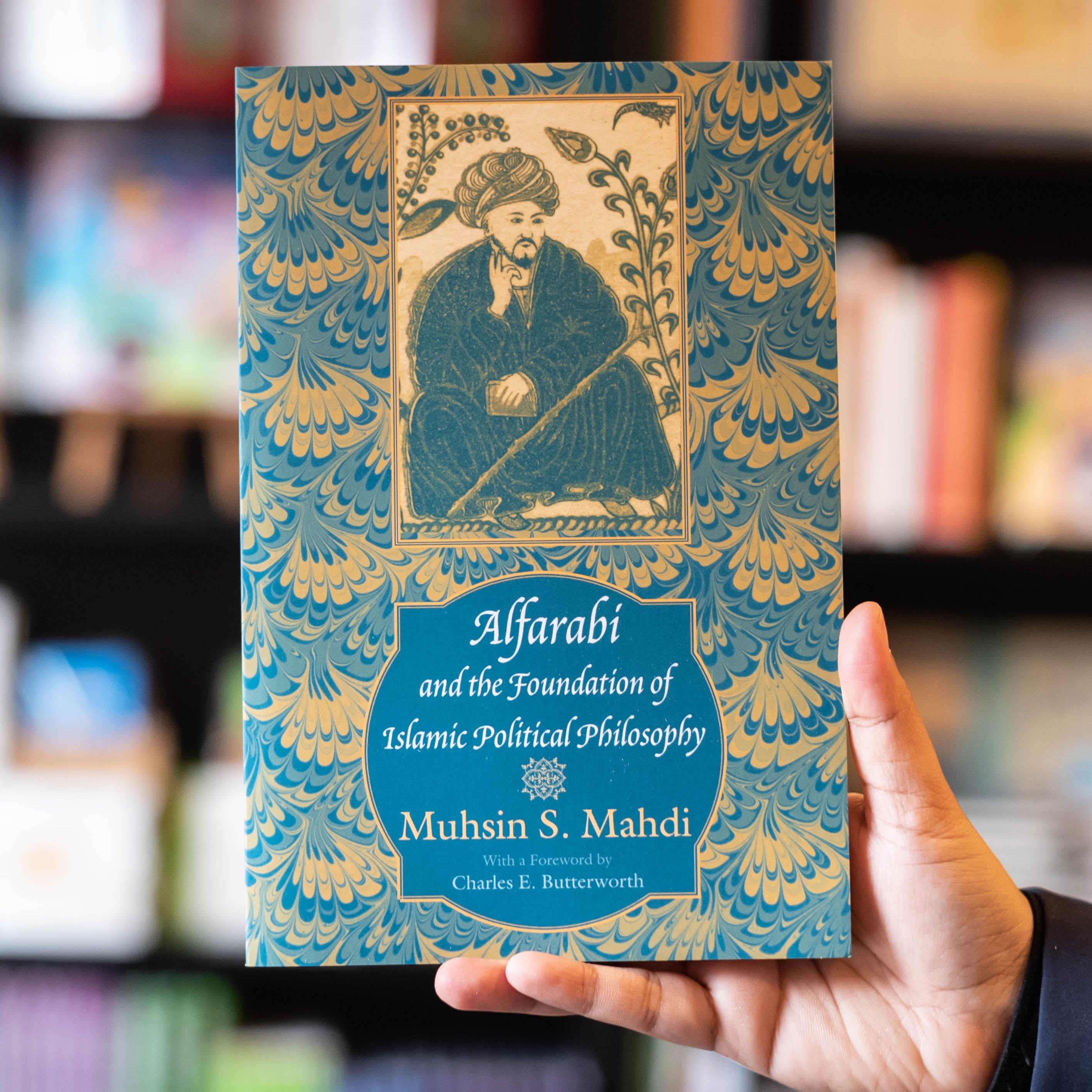


Muhsin Mahdi, Charles Butterworth
Paperback
9780226501871
In this work, Muhsin Mahdi—widely regarded as the preeminent scholar of Islamic political thought—distills more than four decades of research to offer an authoritative analysis of the work of Alfarabi, the founder of Islamic political philosophy. Mahdi, who also brought to light writings of Alfarabi that had long been presumed lost or were not even known, presents this great thinker as his contemporaries would have seen him: as a philosopher who sought to lay the foundations for a new understanding of revealed religion and its relation to the tradition of political philosophy.
Beginning with a survey of Islamic philosophy and a discussion of its historical background, Mahdi considers the interrelated spheres of philosophy, political thought, theology, and jurisprudence of the time. He then turns to Alfarabi’s concept of 'the virtuous city,' and concludes with an in-depth analysis of the trilogy, Philosophy of Plato and Aristotle.
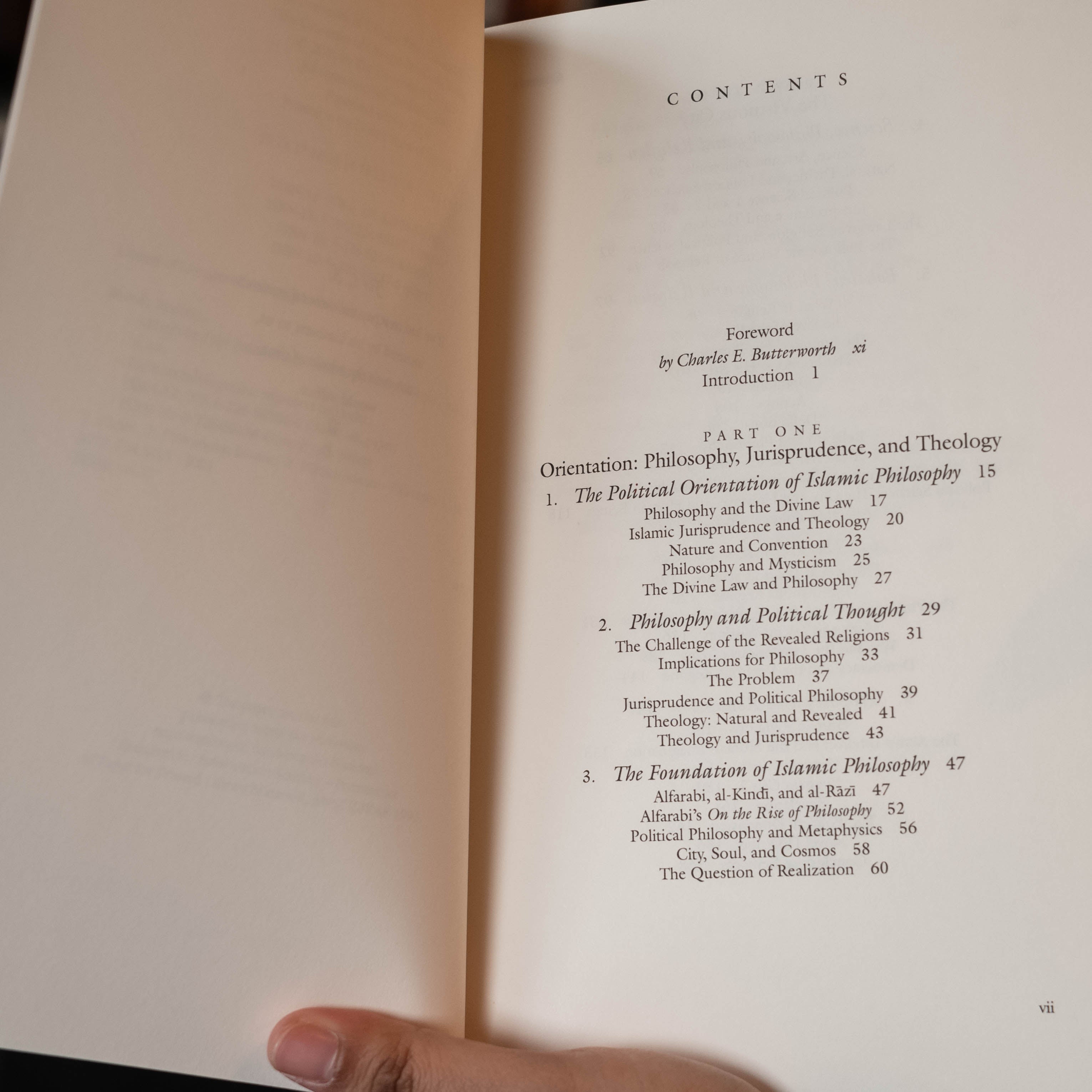
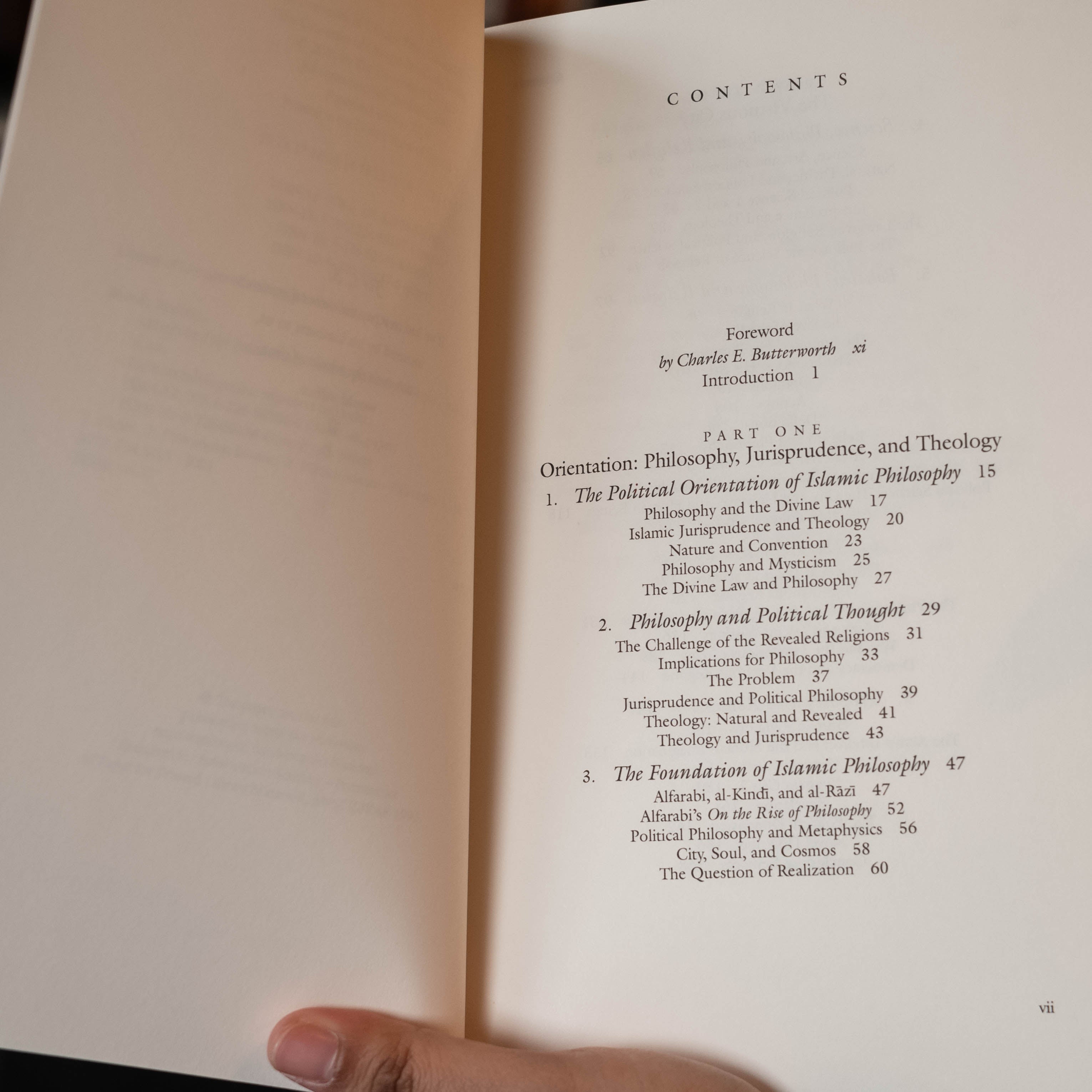
Contents:
PART ONE
Orientation: Philosophy, Jurisprudence and Theology
1. The Political Orientation of Islamic Philosophy
2. Philosophy and Political Thought
3. The Foundation of Islamic Philosophy
PART TWO
The Virtuous City
4. Science, Philosophy, and Religion
5. Political Philosophy and Religion
6. The Virtuous City
7. Prophecy and Revelation
PART THREE
On the Philosophy of Plato and Aristotle
8. The Attainment of Happiness
9. On Aristotle’s Starting Point
10. On Philosophy and Religion
11. Religion and the Cyclical View of History

You have successfully commented, please wait for review
Copied Successfully
You can enjoy up to 1 free gift!