What are you looking for?
Search

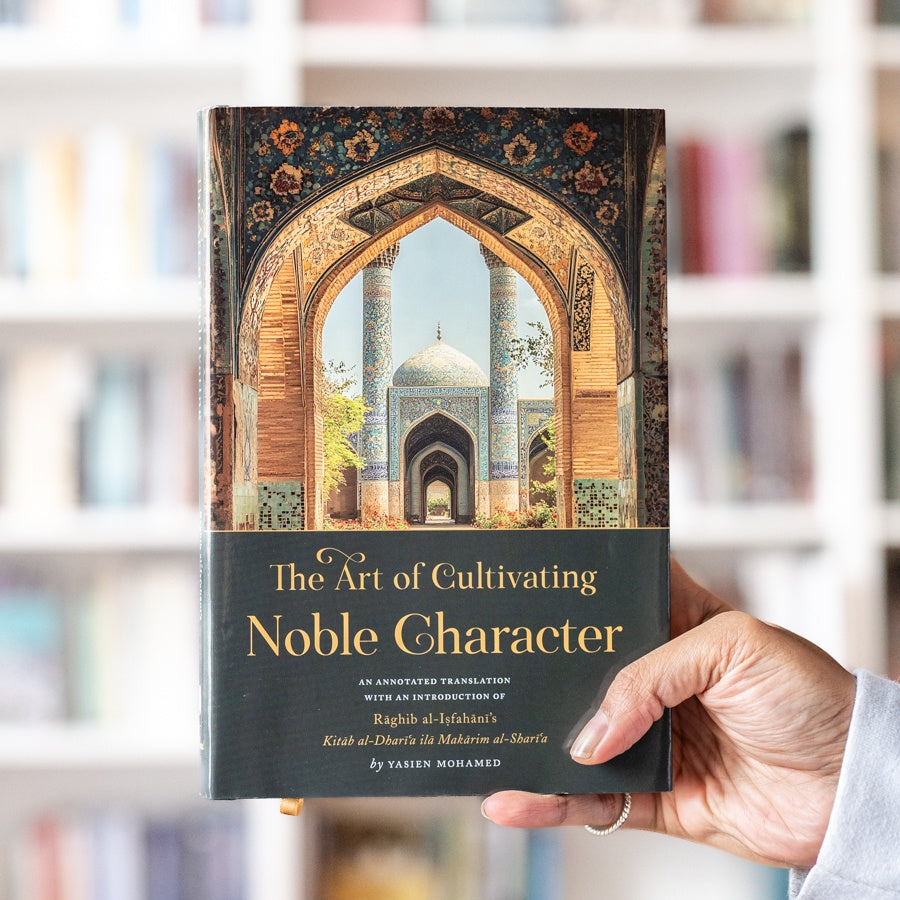


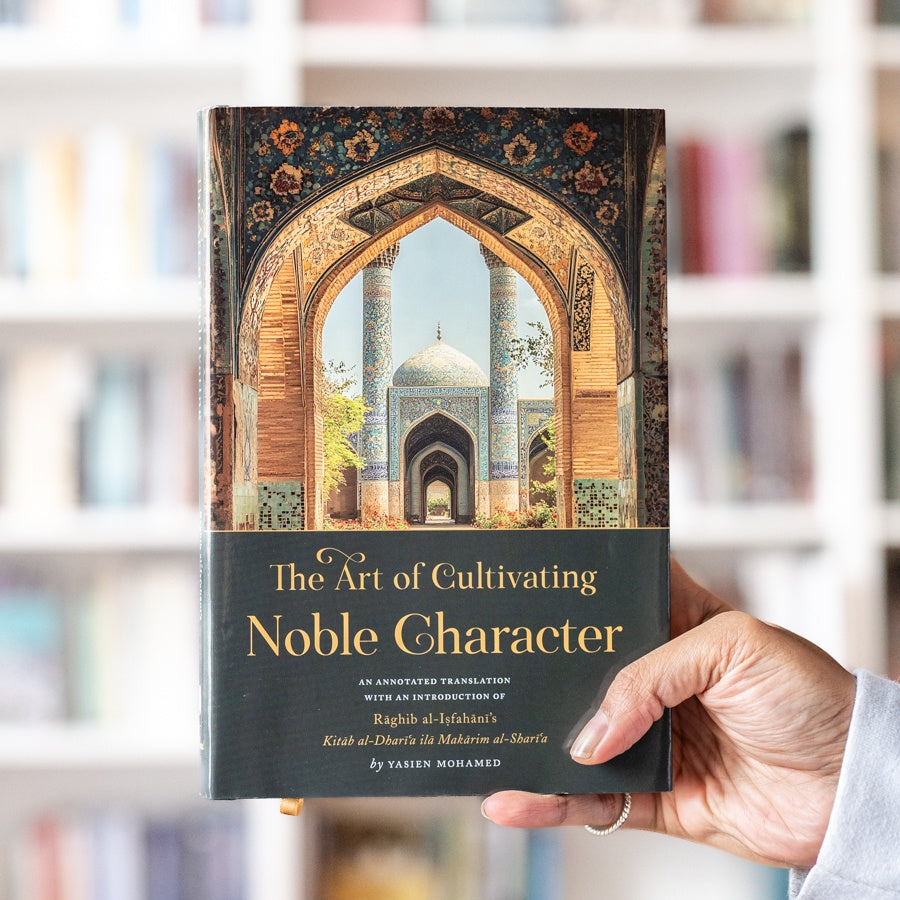



Imam Raghib al-Isfahani
Yasien Mohamed (translation)
Hardback, 304 pages
9781933764238
Raghib al-Isfahani's Kitab al-Dhari'a ila Makarim al-Shari'a
An Annotated Translation
You hold in your hands one of the most important books of the Islamic tradition. The proof of Islam, Abu Hamid al-Ghazali, memorised by heart Kitab al-Dhari'a. Anyone familiar with Imam Ghazali's works will recognise the immense influence this book had on him. – Shaykh Hamza Yusuf
This seminal philosophical work by Rāghib al-Iṣfahānī, grounded in the Sharīʿah, demonstrates the synthesis of reason and revelation in ethical thought and the unity of transmitted (naqliyyah) and rational (‘aqliyyah) sciences, a hallmark of the tenth and eleventh century Islamic thought. – Prof Osman Bakar
This groundbreaking translation revives Imam Raghib al-Isfahani's seminal ethical treatise, integrating Quranic principles with philosophical depth. Isfahani's timeless exploration of moral virtue, the soul and spiritual refinement is characterized by his unique weaving of Quranic verses and prophetic traditions into ethical discourse.
The Art of Cultivating Noble Character offers a rich, contemplative journey into Islamic moral thought, ideal for philosophy students, spiritual growth seekers and those deepening their understanding of Islamic virtue ethics. As a seminal influence on thinkers like Imam Ghazali, Isfahani's masterpiece continues to provide timeless wisdom for life's most pressing moral questions.
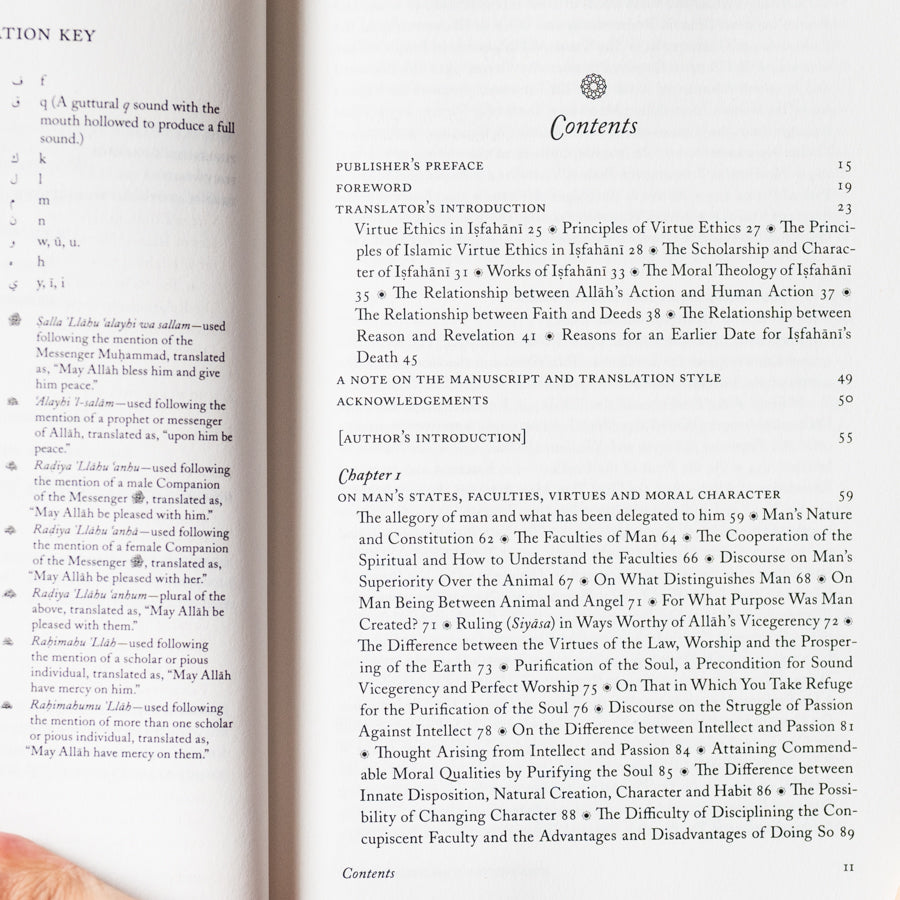
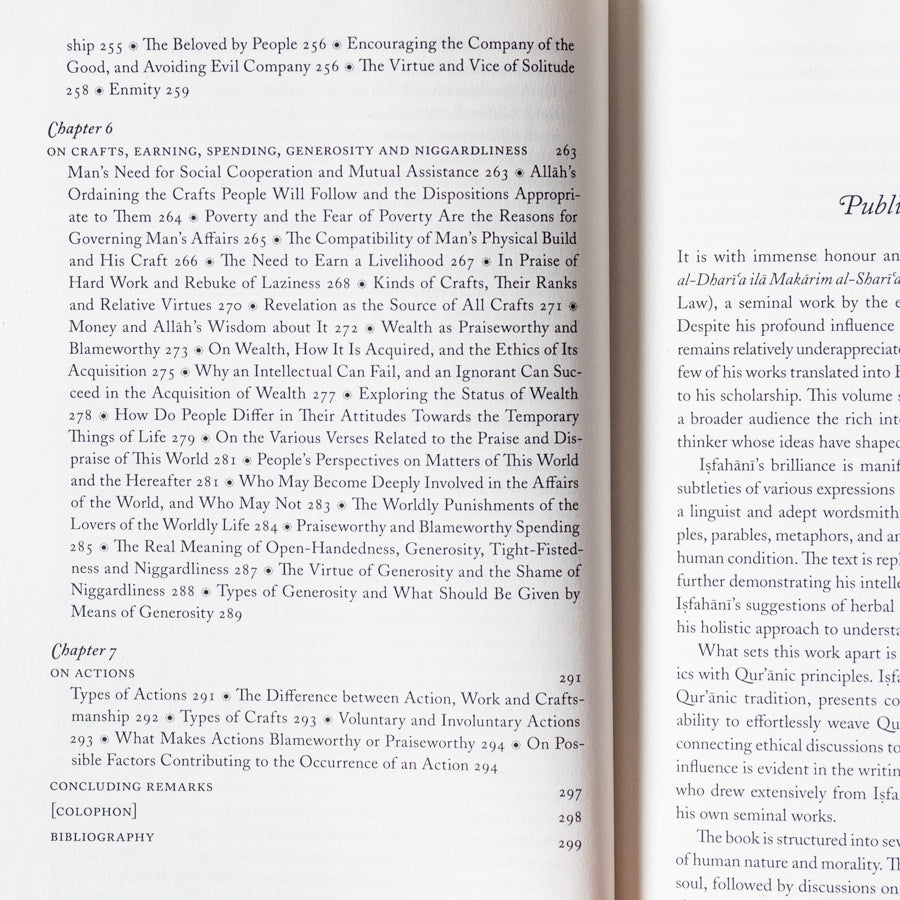
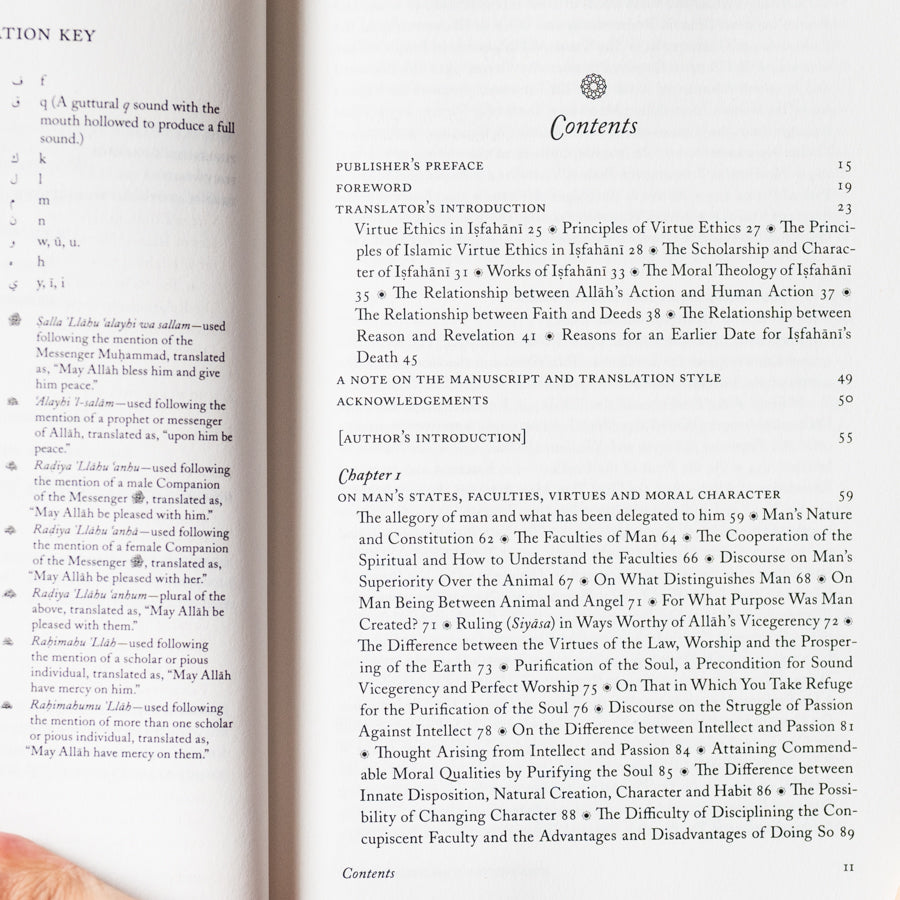
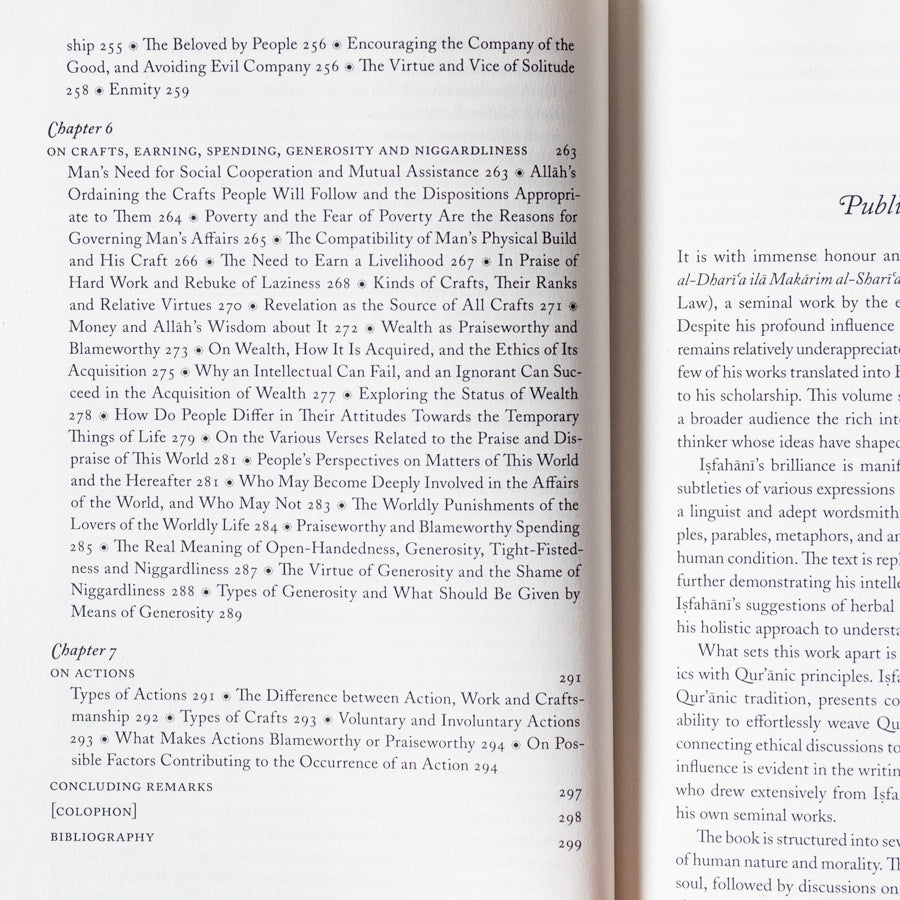
Contents
Foreword by Shaykh Hamza Yusuf
Translator's Introduction
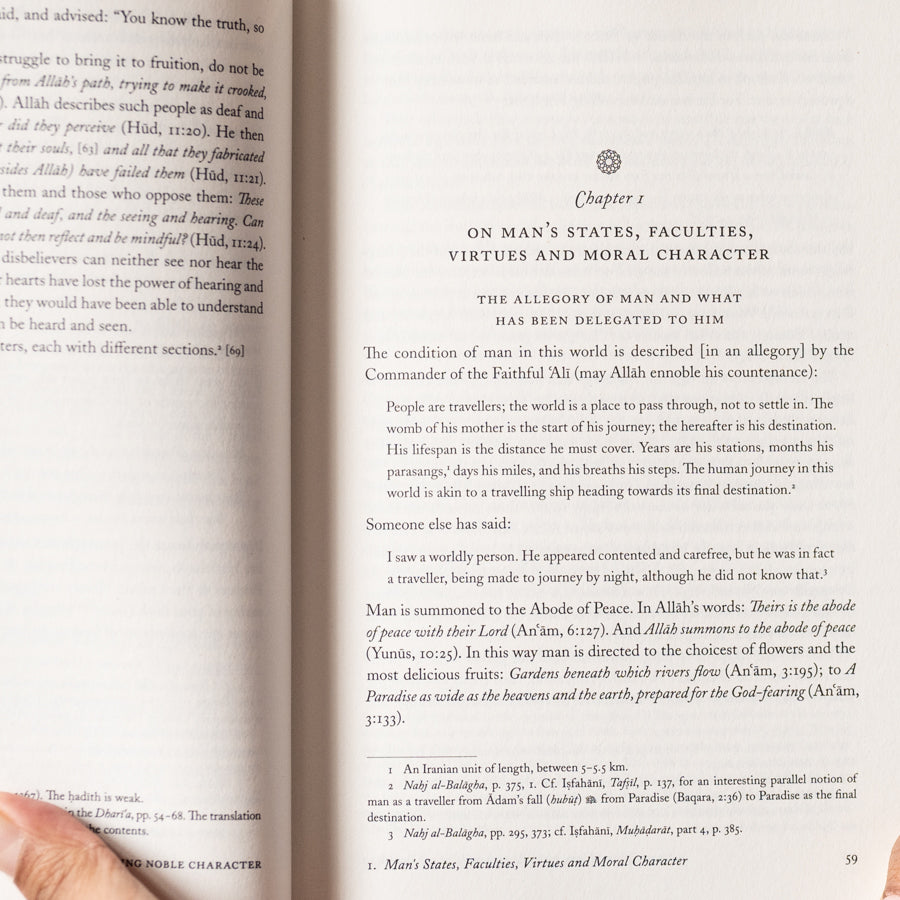
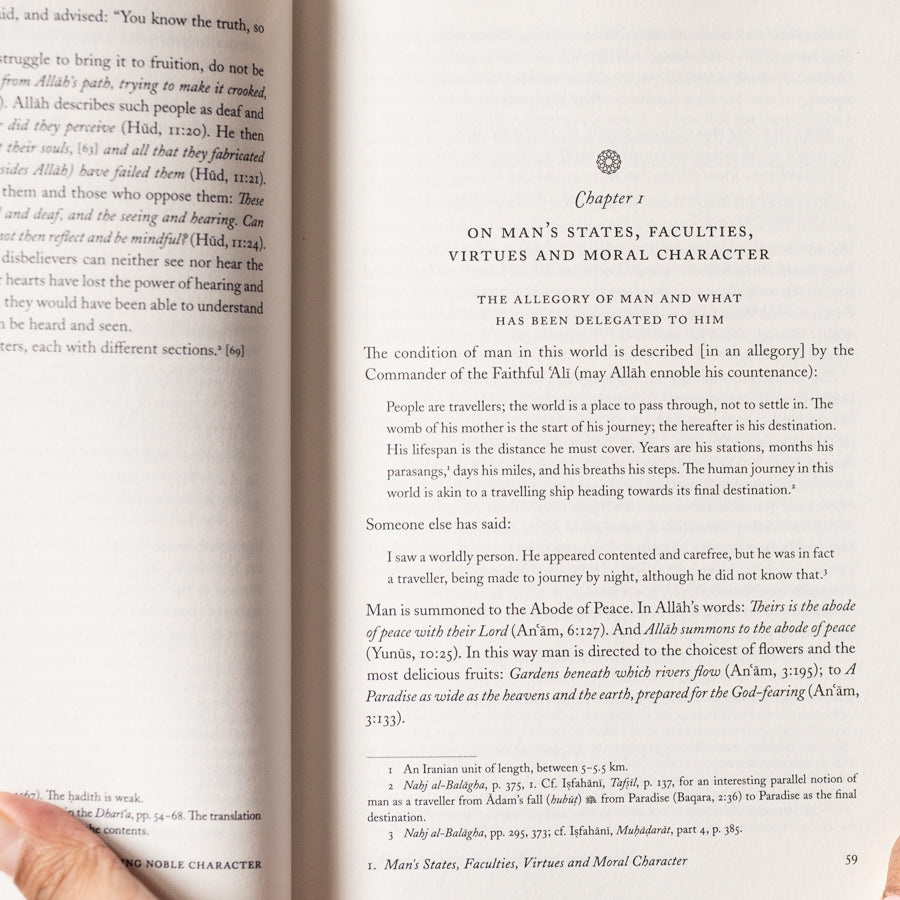
1. On Man’s States, Faculties, Virtues and Moral Character
2. On Intellect, Knowledge and Speech: Their Connections and Their Opposites
3. The Concupiscent Faculty (Quwwa Shahawiyya)
4. On the Irascible Faculty (Quwwa Ghaḍabiyya)
5. On Justice and Injustice, and Love and Hatred
6. On Crafts, Earning, Spending, Generosity and Niggardliness
7. On Actions

You have successfully commented, please wait for review
Copied Successfully
You can enjoy up to 1 free gift!